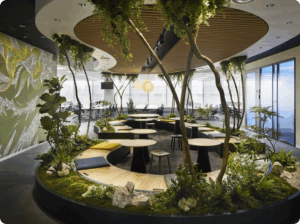


Singapore — A Land of Green Development
Singapore, a small island nation with scarce natural resources and limited land, has defied the odds to become a global model of sustainable urban living. Through visionary leadership, meticulous planning, and relentless innovation, Singapore has transformed itself from a developing port city into a “City in a Garden.”
This transformation didn’t happen by chance. It’s the result of decades of coordinated effort — where policy, technology, and community culture converge to create one of the world’s most sustainable urban environments.
Policy as a Driver
Singapore’s green revolution began with a clear policy direction. Recognizing early on that sustainability was essential for survival, the Building and Construction Authority (BCA) launched the Green Mark Scheme in 2005 — one of the earliest comprehensive green building rating systems in Asia.
The program provides incentives, guidelines, and recognition for sustainable design, construction, and operation of buildings. It covers areas such as energy efficiency, water conservation, indoor environmental quality, and sustainable construction practices.
Since its inception, Green Mark has certified over 40% of Singapore’s building stock, and the government aims to reach 80% green buildings by 2030. This target is reinforced by national frameworks such as the Singapore Green Building Masterplan (SGBMP) and the Green Plan 2030, both of which align with the country’s long-term Net Zero by 2050 vision.
Crucially, policy and market incentives go hand-in-hand. Developers benefit from floor area bonuses, fast-track approvals, and funding under schemes like the BCA Green Mark Incentive Scheme, ensuring that sustainable design is not just encouraged — it’s rewarded.
Iconic Projects: Where Nature Meets Architecture
Singapore’s skyline tells the story of innovation rooted in ecology.
Landmark developments such as Gardens by the Bay, Jewel Changi Airport, and Marina One are not merely architectural feats — they are living, breathing systems that redefine what a modern city can be.
- Gardens by the Bay:A masterpiece of landscape architecture, this 101-hectare park integrates cutting-edge technology like solar-powered “Supertrees” and cooled conservatories that use sustainable energy to maintain ideal climates for diverse plant species.
- Jewel Changi Airport:Featuring the world’s tallest indoor waterfall, the Rain Vortex, and a lush forest valley, Jewel merges travel infrastructure with biophilic design — offering a restorative experience for millions of visitors while reducing ambient heat and improving air quality.
- Marina One:A high-density mixed-use development featuring 350 species of plants and trees across multiple levels. Its “Green Heart” — a lush central courtyard — acts as a natural ventilation and cooling system, reducing energy demand by up to 30%.
Each of these projects demonstrates how architecture, engineering, and ecology can coexist harmoniously — enhancing both environmental performance and human well-being.
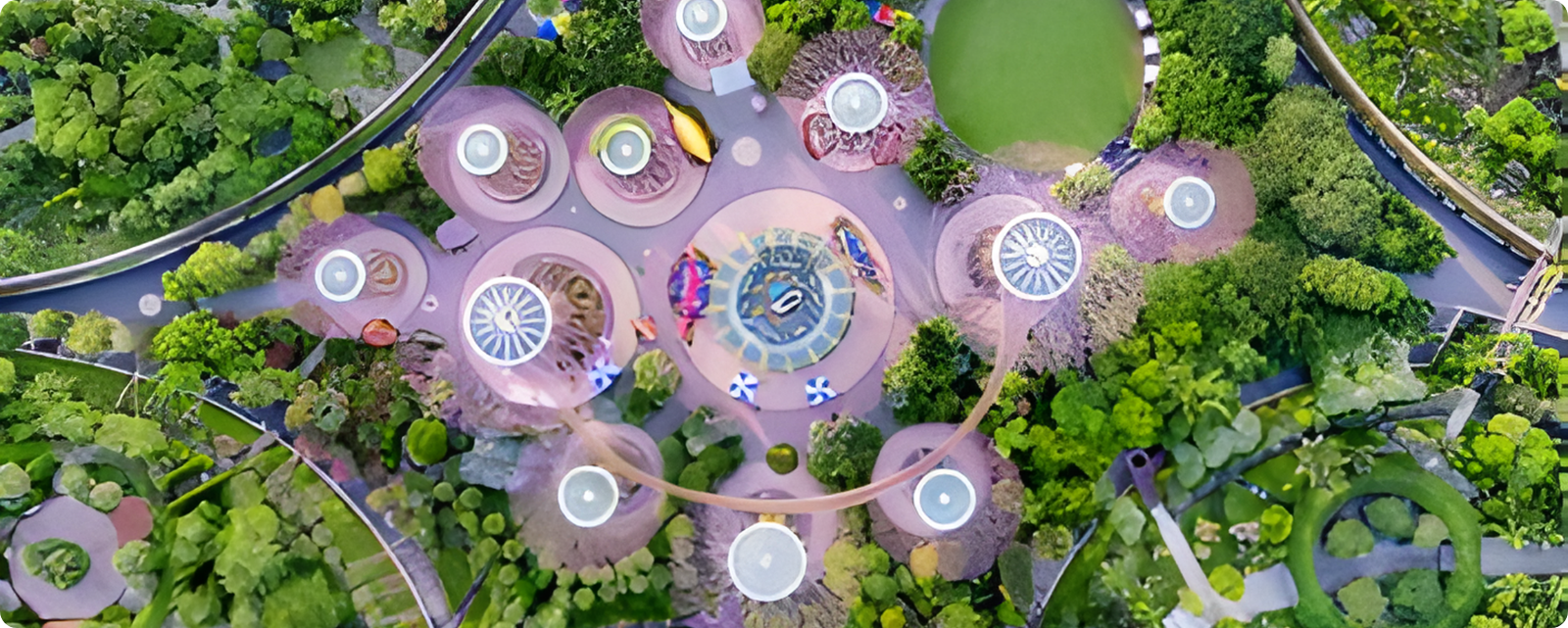
Aerial view of Gardens by the Bay with Supertrees
Vertical greenery at Marina One
Integration of Nature: A System, Not a Symbol
What makes Singapore exceptional is that greenery is not ornamental — it is systemic. Urban planning mandates the inclusion of green elements in every development, from rooftop farms and vertical gardens to permeable pavements and rainwater harvesting systems.
The city’s LUSH (Landscaping for Urban Spaces and High-Rises) program ensures that any green space displaced by development is replaced — often multiplied — through sky terraces and rooftop greenery. This ensures that urban density and biodiversity rise together, not at each other’s expense.
Sustainability also extends beyond buildings:
- A comprehensive public transport networkreduces car dependency and emissions.
- District cooling systemsand smart grids enhance energy efficiency.
- Desalination plants and NEWater recyclingensure water self-sufficiency, a critical achievement for an island without natural freshwater sources.
This holistic approach transforms sustainability from a checklist into a lifestyle — embedded in every block, street, and building.
Lessons for the World
Singapore proves that size is no barrier to sustainability. Despite its limited land and lack of natural resources, it has shown how long-term vision and coordinated governance can redefine what is possible in urban development.
Key takeaways for other nations include:
- Integrated Policy Frameworks:Sustainability succeeds when government agencies, private developers, and citizens work toward a common goal.
- Incentive-Driven Change:Financial and regulatory incentives make green choices economically viable.
- Designing for People:Sustainability is not just about reducing carbon — it’s about improving quality of life, health, and community connection.
- Continuous Innovation:Singapore’s success rests on research and data — from digital twins and smart sensors to predictive energy modeling.
Ultimately, Singapore stands as living proof that green development is not a luxury, but a necessity — and that cities, regardless of size or geography, can thrive when they choose to build in harmony with nature.
Closing Thought
Singapore’s journey from a resource-scarce island to a beacon of sustainable innovation teaches a powerful lesson: green development is not the end goal — it’s the foundation for future resilience.
In the face of climate change and rapid urbanization, Singapore reminds the world that when sustainability becomes part of a nation’s identity, progress follows naturally.
Discover the inspiration behind our travel
Discover the inspiration behind our travel blog, where we share captivating stories and hidden gems from around the globe. Join us as we explore diverse cultures,